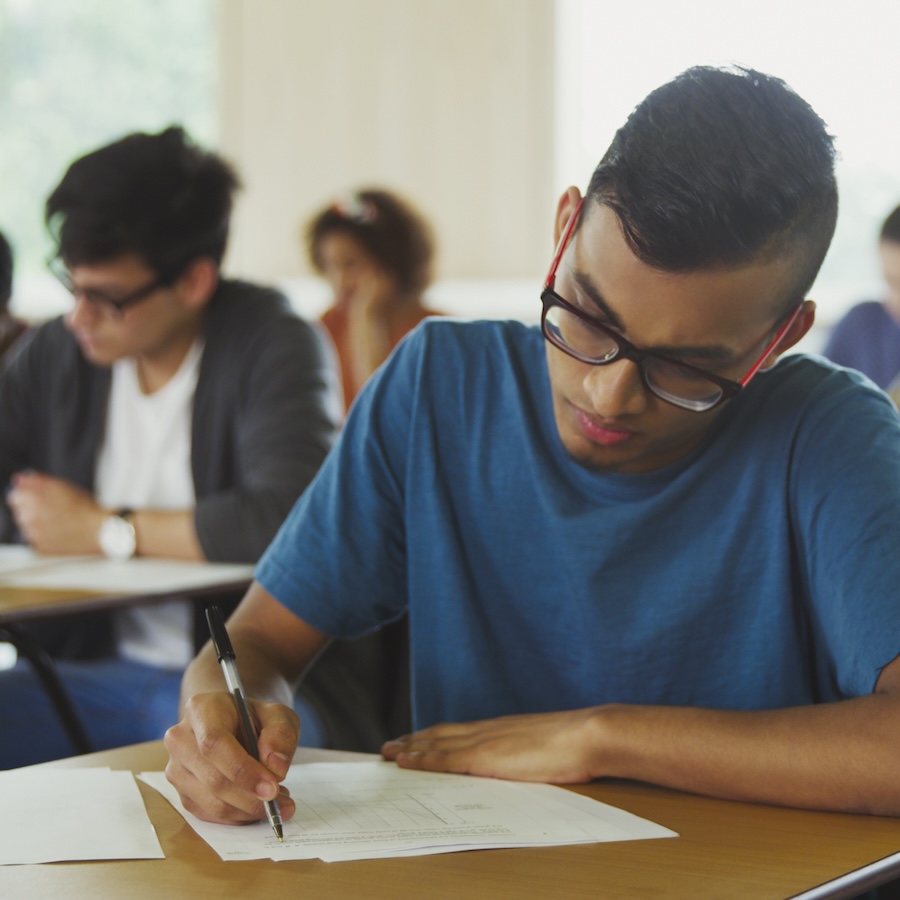

Es común que niños de todas las edades se sientan nerviosos a la hora de dar un exámen. Para algunos, ese estrés se manifiesta como preocupación o pánico, mientras que para otros se presenta de forma física, por ejemplo, dolor de estómago, dolor de cabeza, náuseas o fatiga. Esta experiencia se suele llamar ansiedad ante los exámenes, una forma de ansiedad con relación al desempeño producto de una intensa presión interna por obtener buenos resultados. Algunos niños comienzan a preocuparse días antes, incluso con miedo de ir a la escuela el día del examen.
Si bien la ansiedad ante los exámenes se suele asociar con los adolescentes, puede ser experimentada por niños de todas las edades. La buena noticia es que hay pasos simples y útiles que los padres pueden seguir para ayudar.
1. Haga preguntas
Comience por escuchar. Hablar sobre lo que les preocupa puede ayudar a los niños a comprender su ansiedad. Intente hacer preguntas como las siguientes: “¿Qué es lo que más te preocupa de este examen?” o “¿En qué puedo ayudar para que te sientas más preparado?” El primer paso para aliviar la ansiedad es comprender la raíz del estrés.
2. Practicar técnicas de relajación
Ayude a su hijo a encontrar estrategias de relajación que pueda aplicar en cualquier momento. Los niños más pequeños podrían verse beneficiados por la visualización: imaginar un lugar seguro y feliz al mismo tiempo que respiran lentamente. En cambio, a los niños más grandes y los adolescentes suelen gustarles más los ejercicios de respiración, la meditación o técnicas de conexión con el presente que pueden usar en el día del examen.
3. Ayúdalos a prepararse (sin que se abrumen)
Si hayq ue estudiar, cree un plan gestionable con sesiones de estudio cortas distribuidas en períodos de tiempo. Fomente las pausas, el movimiento y el descanso. Ayude a su hijo a encontrar los métodos de estudio que mejor le funcionen: usar tarjetas, escribir notas o hablar de los distintos temas. Los docentes también pueden actuar como gran fuente de orientación.
4. Concéntrese en el esfuerzo, no en los resultados
Ofrezca elogios específicos y honestos, y recuérdele a su hijo que el prepararse y hacer lo mejor posible ya es un acto importante. Evite poner énfasis en las consecuencias de obtener malas calificaciones. Hay mayor confianza cuando los niños se sienten apoyados, no presionados.
5. Refuerce los hábitos saludables
Dormir bien, comer con regularidad, hacer ejercicio y limitar el tiempo frente a las pantallas ayudan a reducir el estrés. El día del examen priorice el descanso y un desayuno equilibrado, especialmente con alimentos ricos en proteínas, a fin de ayudar a su hijo a estar firme y concentrado.
6. Haga preguntas después del examen
Una vez que ya pasó, tengan una conversación. Pregúntele cómo se sintió y recuérdele que ya dio el examen. Si no le fue bien, normalice los contratiempos y ponga énfasis en el crecimiento; los errores son parte del aprendizaje.
Es común sentir ansiedad por los exámenes, y el apoyo que usted da realmente hace la diferencia. Con tranquilidad, preparación y hábitos saludables, los niños pueden aprender a controlar el estrés y desarrollar confianza en sí mismos, tanto dentro del aula como fuera.